Platform Engineer vs DevOps Engineer Key Differences
Platform engineer vs DevOps engineer: see how scope, ownership, and tooling differ so you can target the right job postings.
By David Nix
Published

The difference between platform engineer and DevOps engineer comes down to this: platform engineers build the internal tools and systems other engineers use, while DevOps engineers own the pipeline that gets code from a commit into production. A platform engineer might spend a sprint building a self-service deployment tool for product teams. A DevOps engineer might spend that same sprint fixing a broken CI/CD step so a release can ship on time. Both touch infrastructure, both write code, but the end goal is different: one builds a product for internal users, the other keeps the delivery process running.
Job postings rarely respect that line. A listing titled "DevOps Engineer" might ask for Kubernetes platform design work, and one titled "Platform Engineer" might just want someone to babysit Jenkins. Companies often use the two titles to mean whatever their last hire happened to do, which leaves applicants guessing about what the job actually involves. The fastest way to tell them apart is to skip the title and read the responsibilities section line by line, looking for whether the work is about serving internal engineering teams or keeping software shipping and production healthy.
Table of Contents
Why Companies Split These Roles Apart
DevOps began as a culture fix. Small teams broke down the wall between developers and operations so the same people could write code and own its uptime, without a separate function for either.
Platform engineering shows up later, once an org has grown past a handful of squads. At that size, every team writing its own deploy scripts and provisioning its own cloud resources stops scaling, so a dedicated team forms to turn those scattered scripts into one reusable internal product.
That pattern, a central team packaging DevOps practices into tools other engineers consume, is documented in this breakdown of platform engineering versus DevOps. The table below lays out how the two roles differ once that split happens.
| Area | DevOps Engineer | Platform Engineer |
|---|---|---|
| Focus | Shipping and running the pipeline | Building internal tooling |
| Primary output | Working CI/CD and stable releases | Self-service platform other teams use |
| Customer | The release itself | Other engineering teams |
What Each Role Owns On A Given Day
A DevOps engineer's day centers on one product's release path. They watch the pipeline, fix broken build steps, roll back a bad deploy, and make sure the app their team owns stays shippable and healthy in production.
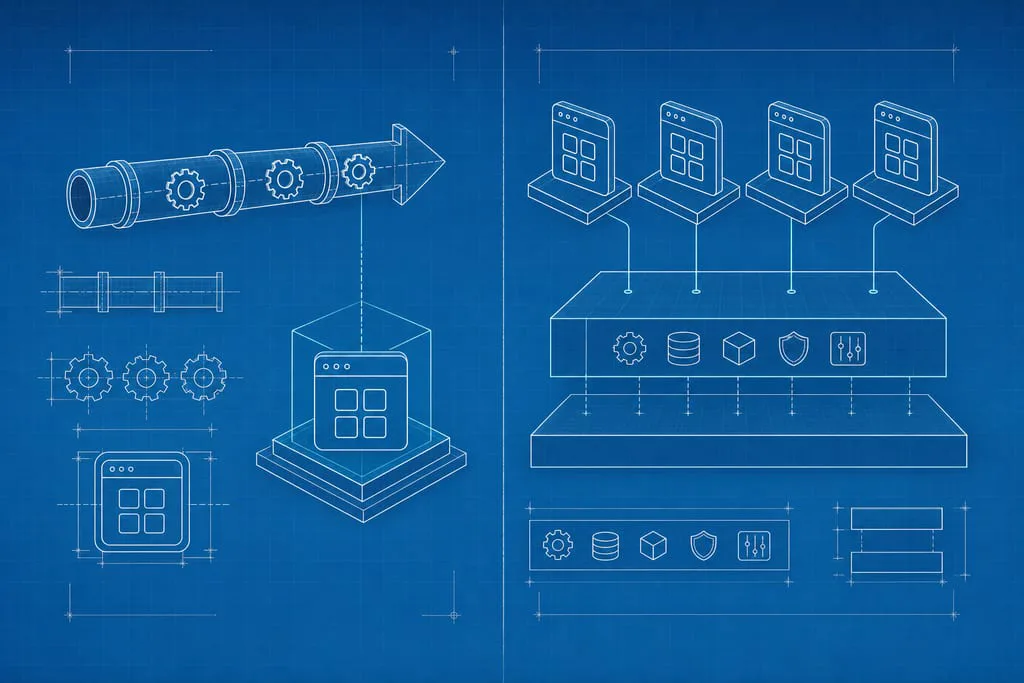
A platform engineer's day centers on tools other engineers depend on. They build golden paths, self-service provisioning, and shared tooling that dozens of engineers across different teams use without ever talking to the platform team directly.
Picture a Jenkins job that fails overnight. A DevOps engineer on the affected product team fixes that one job so their release goes out on schedule. A platform engineer, faced with the same failure pattern repeating across six teams, builds the internal tool that replaces Jenkins for everyone, so no team has to fix that job again. That difference, one team's release versus every team's tooling, is the clearest way to sort a posting by what it actually asks for.
- DevOps engineer: owns CI/CD for one app or service
- DevOps engineer: tied to that team's release cadence
- Platform engineer: owns the internal developer platform itself
- Platform engineer: builds for many teams at once, not one release
Tooling And Tech Stack Side By Side
DevOps job postings lean on CI/CD tools, scripting, and infrastructure as code written project by project, plus incident response when their service breaks. Platform engineering postings lean on Kubernetes operators, internal developer portals built on tools like Backstage, and API design, since other engineers are the ones using what gets built.
Both roles touch Terraform, containers, and observability tooling, but the platform engineer builds the abstraction layer that sits on top of those tools so a product team never has to configure them from scratch. That's the one real overlap between the two stacks, and it's also where titles get blurry in job ads.
- DevOps tags to look for: CI/CD, Incident Response, scripting languages like Python
- Platform tags to look for: Platform engineering, Distributed Systems, Cloud infrastructure
- Shared tags, harder to read alone: Terraform, Kubernetes, Observability
- If a posting lists API design or developer portal work, lean platform
How The Two Roles Work Together On A Team
Platform teams treat other engineers, DevOps engineers included, as internal customers. The platform team's job is to make the DevOps engineer's job easier by giving them self-service tools instead of making them provision infrastructure by hand.
A DevOps engineer on a product team consumes what the platform team built: a deploy button, a provisioning template, a pre-approved service catalog. In smaller companies, one person does both jobs, which is why combined titles like "DevOps/Platform Engineer" show up on job boards. Larger orgs split the two once enough product teams exist to justify a dedicated platform group, usually once a company has several squads all repeating the same infrastructure work.
- Small company: one person covers both roles under one title
- Growing company: a platform team forms to serve multiple product teams
- Mature company: DevOps engineers report into product teams, platform engineers report into a platform org
- Either way, the platform team's users are internal engineers, not end customers
Where Each Track Leads Your Career
DevOps experience tends to lead toward SRE, infrastructure lead, or cloud architect roles, all focused on keeping systems reliable at scale. Platform engineering experience tends to lead toward platform lead, developer experience lead, or staff-level roles designing internal products with their own APIs and users.
Platform roles generally demand stronger software engineering skills, since the platform itself behaves like a product that other engineers adopt or reject. If you'd rather keep a specific service running clean, follow the DevOps and SRE path; if you'd rather build the thing other engineers use every day, follow the platform path. Either path shows up clearly on a devopsjobs.com listing once you know which tags to check.
- DevOps track: SRE, infrastructure lead, cloud architect
- Platform track: platform lead, developer experience lead, staff platform engineer
- Deciding factor: do you want to serve one team's release, or build for every team
Spotting What A Posting Really Wants
A title tells you almost nothing once you've seen enough listings. Companies name roles after whoever filled the seat last, not after some fixed job description, so "Platform Engineer" and "DevOps Engineer" get swapped constantly for the same underlying work.
Skip the title and go straight to the responsibilities list. Platform roles describe work aimed at other engineers: building tools, reducing friction, giving teams a faster way to ship without hand-holding.
- "Self-service" tooling or platforms
- "Internal tooling" or "developer experience"
- "Golden paths" or "internal developer portal"
DevOps roles describe work aimed at one release path or one service staying healthy in production.
- "Pipeline ownership" for a specific app
- "Release process" for a team or product
- "Incident response for [service name]"
Here's where the two postings land once you line them up by phrasing instead of title.
| Phrase In Posting | Likely Role | Who It Serves |
|---|---|---|
| Build self-service deploy tooling | Platform Engineer | Other engineering teams |
| Own CI/CD for payments service | DevOps Engineer | One product team |
| Design internal developer portal | Platform Engineer | Engineers company-wide |
| On-call for checkout incidents | DevOps Engineer | One service's uptime |
| Reduce provisioning friction org-wide | Platform Engineer | Multiple squads |
A board that tags postings by the actual skills in the listing, rather than relying on whatever title the recruiter typed in, cuts this guesswork down. That's a faster filter than reading every posting word for word, and it catches the mismatches a plain title search misses, a point also made in this comparison of SRE, DevOps, and platform engineering roles.
Check The Tags Before You Click Apply
Open the next posting and read the bullet points under responsibilities before you even look at the title again. If the bullets talk about tooling, APIs, or "self-service" for other teams, treat it as platform work. If they talk about one service's pipeline, release, or on-call rotation, treat it as DevOps work. Then confirm against the skill tags, since a tag like Platform engineering or Site Reliability Engineering tells you more than a job title ever will. DevOps Jobs tags its listings this way, so you can filter by the actual skills a posting asks for instead of guessing from whatever name a recruiter typed into the title field.
Common questions
Should I turn down a DevOps offer if what I really want is platform work?
No, not if the offer gets you close to the work you want. Many platform engineers started on a DevOps team fixing pipelines, then moved into tooling once they understood what product teams kept struggling with. Take the offer, ask about internal tooling projects in the interview, and use the first year to build toward the platform side instead of waiting for a perfect title.
Does a platform engineering title pay more than a DevOps engineer title?
Not consistently, since pay depends more on the company and scope than the title itself. A senior platform role at a company with dozens of engineering teams usually pays more than an entry-level DevOps role, but the reverse is also common at smaller companies. Compare the responsibilities and the comp range on each listing rather than assuming one title pays better across the board.
What happens if my DevOps job starts looking like platform work but my title never changes?
Your resume should describe the work, not wait for HR to update your title. If you're building self-service tools or an internal portal, write that in your bullet points even if your badge still says DevOps Engineer. Recruiters and hiring managers read responsibilities before they read titles, and a listing's tags often matter more than its title too, which is why devopsjobs.com tags postings by actual skills instead of the name a recruiter typed in.
Can I apply to platform engineering roles without having built a self-service tool before?
Yes, if you can point to related experience that shows the same instinct. Automating a manual process, writing a reusable Terraform module, or building an internal script other engineers adopted all count as platform-shaped work, even without the title. Call those projects out directly in your application instead of hoping the hiring manager connects the dots on their own.